


Intro
4,000 gimbap rolled by hand in the lounges daily. That’s before you get to the ramyeon library, the chocolate-making studio, or the rotisserie chicken spinning in the lounges.
Korean Air invited me to Seoul for a few days of behind-the-scenes access: the catering kitchen, maintenance hangar, cabin crew training facility, the works.


I generally pay for my own travel, but I accept a hosted trip every now and then when the access is genuine, and this one absolutely was.
Thank you to everyone at Korean Air who made this happen.
Sydney to Seoul
I was lucky to fly on the 787 with the new cabin, and the seats and bedding were great. The Prestige Suites 2.0 are a real step forward.


A menu, headphones, and an amenity kit were waiting for me at the seat, with drinks and nuts offered shortly after boarding.
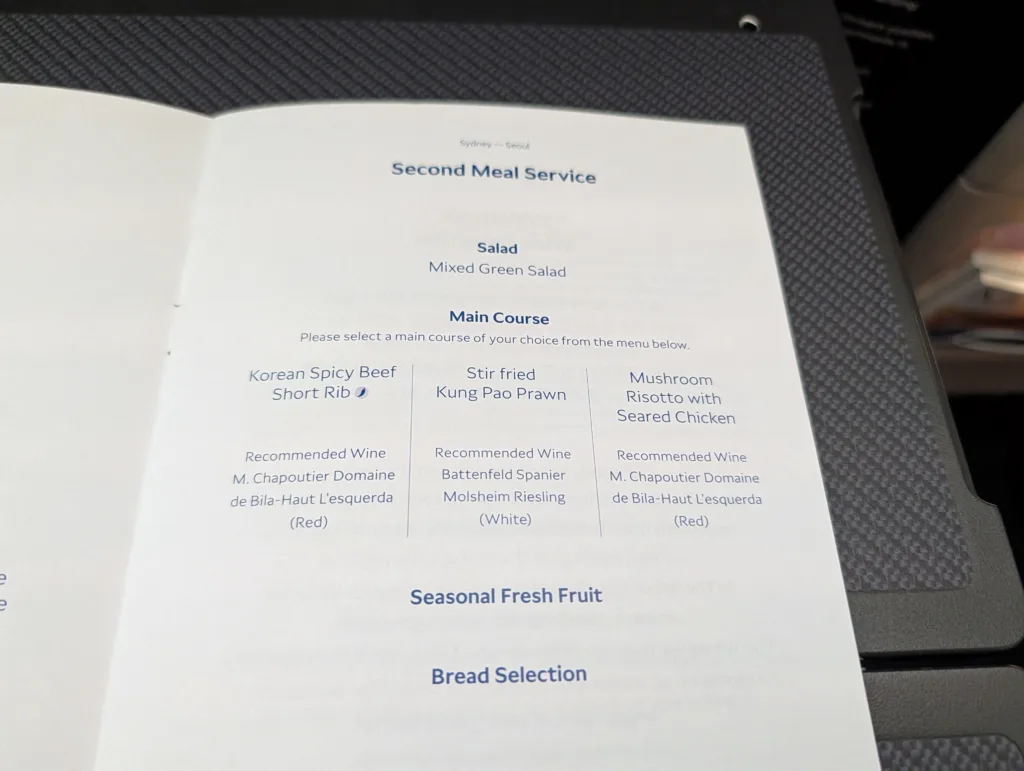
Two meal services are offered on this sector, plus snacks are available throughout.
Here’s a look at the inflight menu:
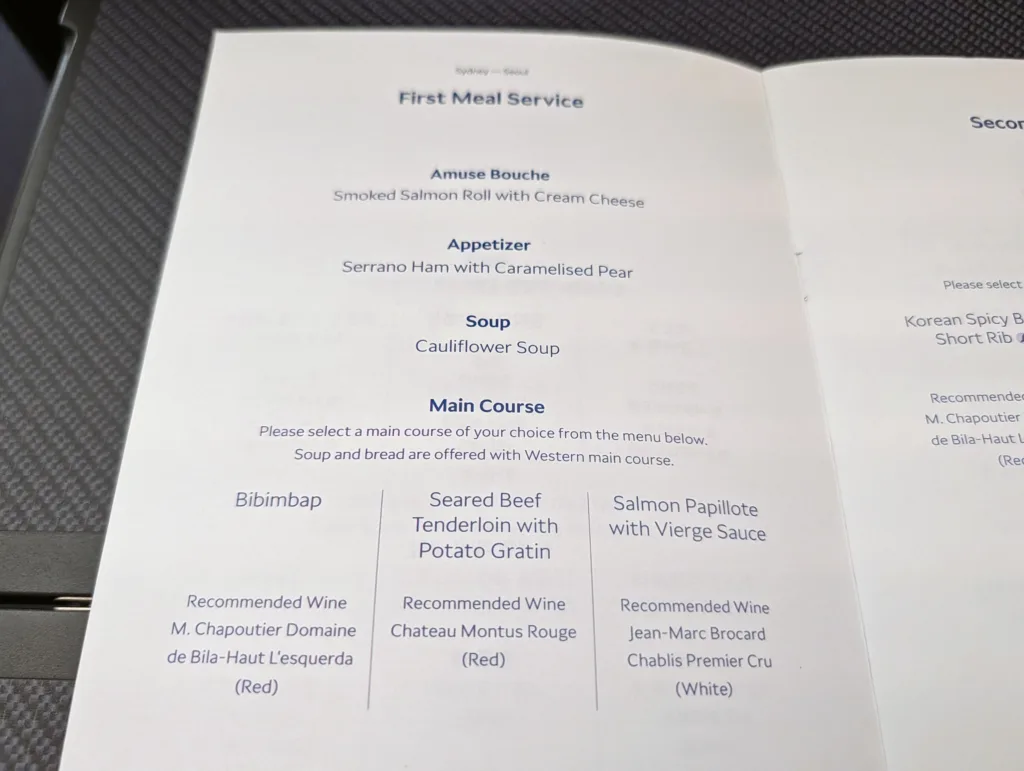
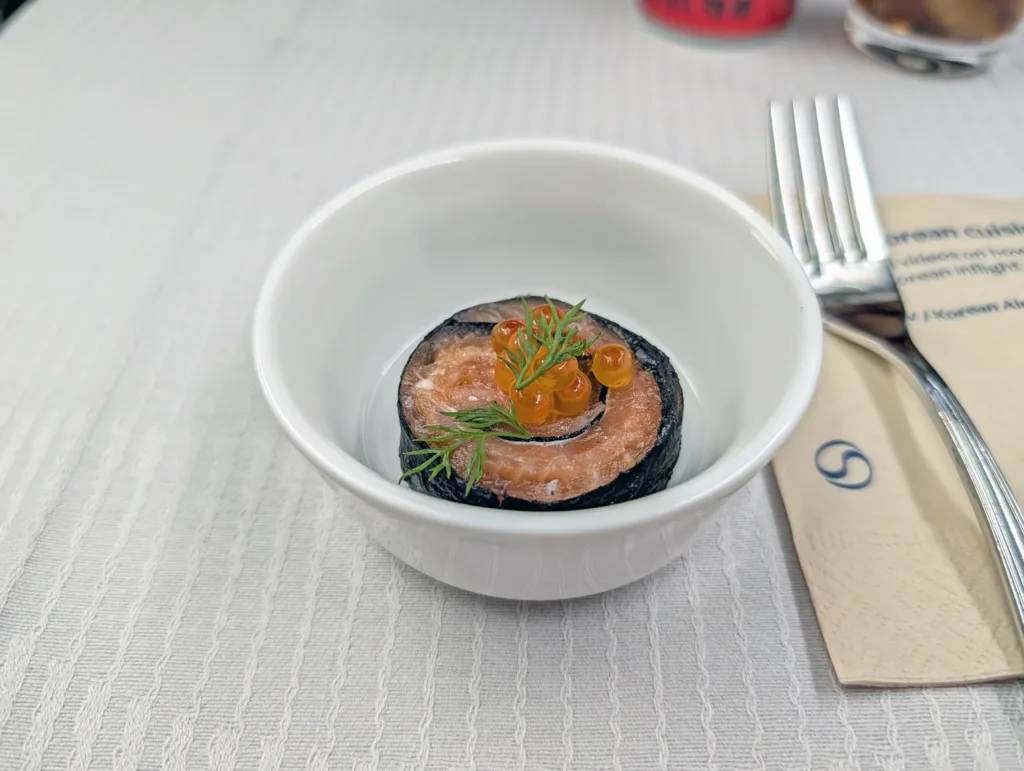
An amuse-bouche is not something you see in business class very often, and Korean Air opened with a smoked salmon gimbap, and it set the tone.
That was followed by serrano ham with caramelised pear and cauliflower soup served with main course.
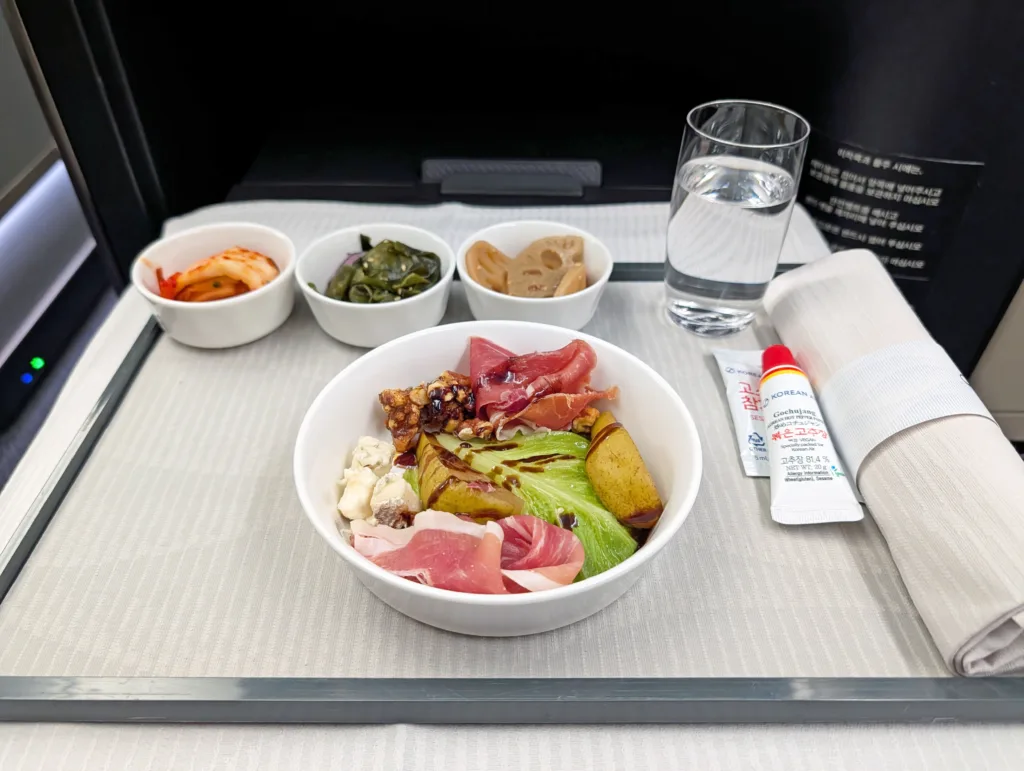
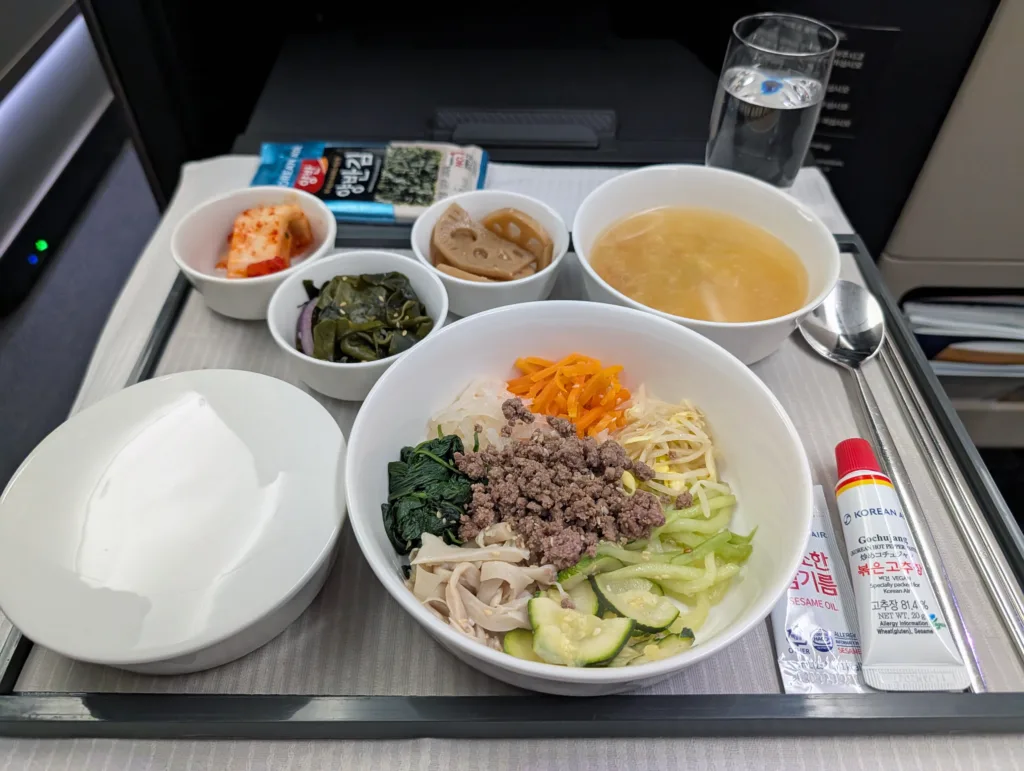
I went for bibimbap, which translates surprisingly well at altitude.
You add the gochujang paste yourself and mix it all together; it’s interactive, making the meal feel more engaging.


Following the main course, ice cream, petit fours, fruit, and cheese and crackers were offered.
By this point, I was quite full, but somehow always managed to squeeze in more.


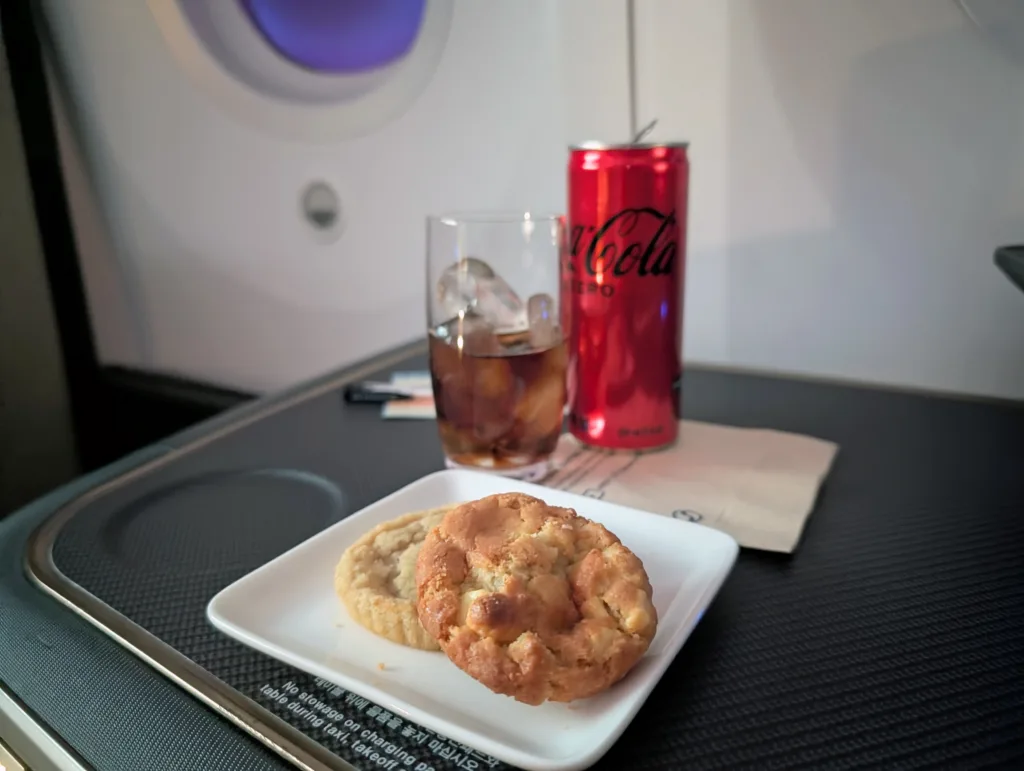
Midway between services, I ordered some cookies, and it was a nice touch to see those same cookies show up again on the Seoul to Zurich sector.
The second service began with a fresh salad, served with bread, Pepe Saya butter, cute salt and pepper shakers, and salad dressing.
For the second service I went with the prawns, and I can’t believe how good they were.
The marinated prawns were coated in a tangy, sweet, and spicy sauce, and honestly, they’re the best prawns I’ve ever had inflight, so juicy and tasty.


Lounges
Korean Air operates seven lounges at Incheon Terminal 2 following a major renovation programme, so give yourself enough time to explore them!
The Miler Lounge is for passengers who’ve passed the million-mile mark and offers a more elevated experience.


A rotisserie chicken oven is on display, a noodle bar, wellness rooms, and Grand Hyatt chefs on hand.
The space is generous, well-stocked, and lovely to spend some time in. The food is fantastic too.
The Prestige East Lounge offers the Ramyeon Library, an entire section of the lounge built around ramyeon, with a wall-unit library of noodle options where you pick your preferred variety, choose your toppings, and cook them yourself at automated machines.


Interestingly, Korean Air originally moved away from cup noodles to a made-to-order noodle bar, got pushback from passengers who wanted ramyeon, and rather than retreating, went all in.
Right next to it is L’Atelier, a chocolate-making studio run by Grand Hyatt chefs, with sessions at 10am, 2pm, and 4pm and just six guests per class.
Classes include bark, chocolate, cookies, and lollipops, and demand has been so high that they’ve had to limit sessions to maintain the quality of the experience.


You make your own chocolate bar and can take it away with you.
There’s also an arcade room with photo booths, claw machines, air hockey, and car racing games, which I didn’t expect to find in a premium airport lounge, but it keeps the kids busy and perhaps makes the lounge quieter…


The First Class Lounge recently had a facelift and is operating at a completely different level.


Privacy from the moment you arrive, dine-on-demand, with staff taking orders tableside.
Bernardaud porcelain, Christofle cutlery, and Baccarat crystal, and artwork by Anish Kapoor alongside acclaimed Korean artists, all set within a space inspired by traditional Korean architecture: wood pillars, beams, and ramie textiles throughout.
The Catering Kitchen
Korean Air operates its own catering facility that produces between 60,000 and 70,000 meals daily, of which 45,000 are bound for Korean Air flights.
Before entering the kitchen, we put on coverings, went through an air shower, and washed our hands.


Menus rotate every 3 months and are developed in collaboration with the airline’s catering chefs.
Watching it all happen from the floor is something else entirely: staff working through business-class salads on assembly lines, packing carts for flights, a dishwashing operation running constantly in the background.
At the end of the tour, we sat down for a taste test of First Class dishes, which was such a highlight.


Seoul to Zurich
The service on this sector was similar to Sydney, with perhaps a little more personal attention along the way.


The airline offered four main course options during the first service; here’s a look at the menu:
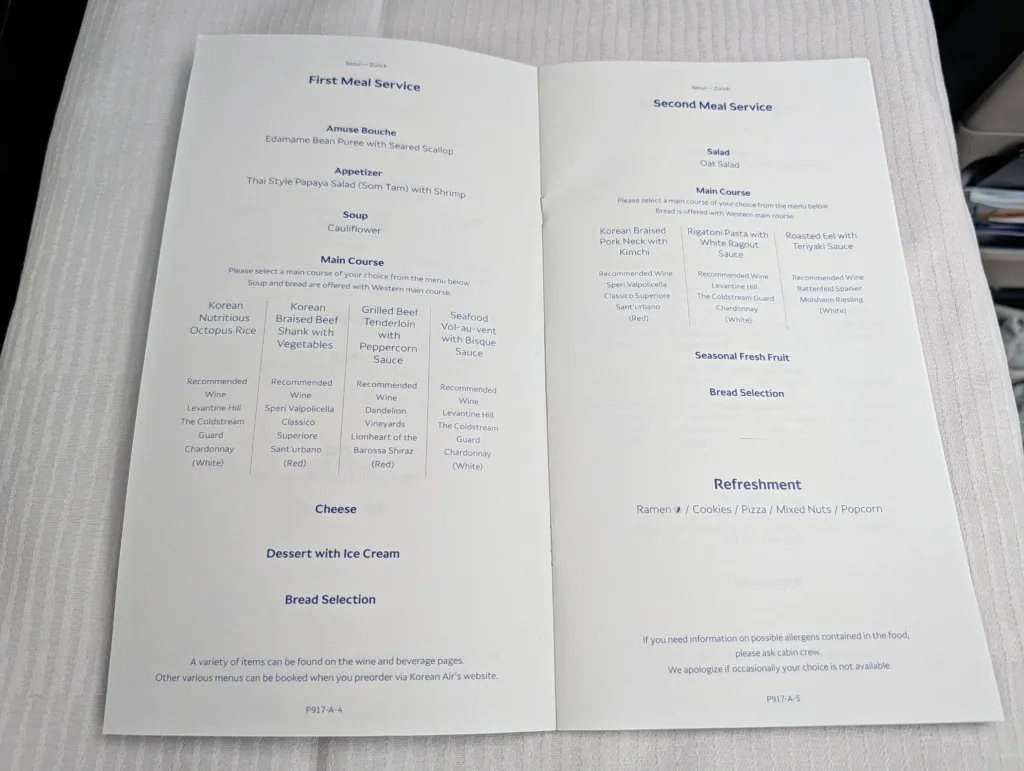
I went with the Korean Nutritious Octopus Rice, which follows the same interactive format as the bibimbap.


You build the dish yourself, using the dried seaweed to wrap the food and eat it, and I loved being able to add the fresh herbs and season it as I wanted.
The crew also provided verbal instructions on how to eat the dish, which I really appreciated.
Cheese, dessert with ice cream, and fruit followed.
The snack service from Seoul offered slightly more options than Sydney: pizza, cookies, and Dunkin’ Donuts items.


I even got a peek at what economy was getting, Korean Air’s K-Dog, a street-style corn dog, was doing the rounds alongside bibimbap, and a second meal service followed later in the flight.


The second service in prestige class was an oat salad starter that was cleaner and crisper than you’d expect at hour ten, alongside rigatoni with white ragout sauce.


Tableware
Korean Air has introduced the Armani/Casa Nidi collection for Prestige Class: rectangular plates paired with tapered round bowls, each featuring a subtle bamboo detail.
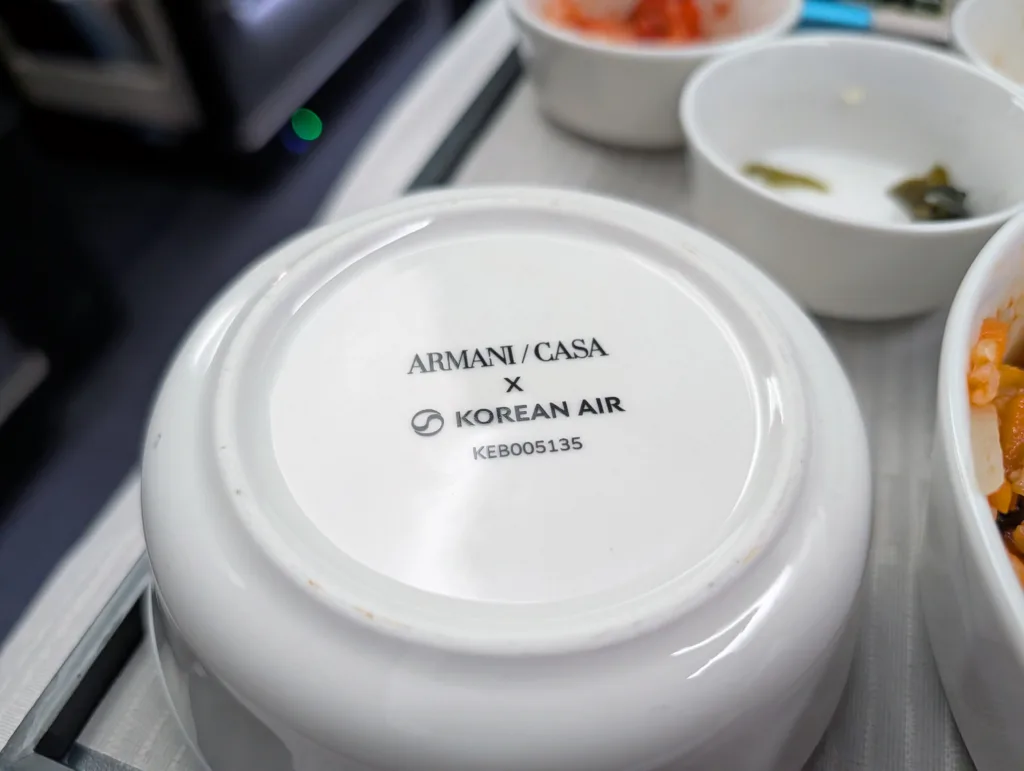
The tray setup alone took some engineering; Korean cuisine arrives with multiple plates at once: soup bowls, rice bowls, bibimbap bowls, ramekins, and every piece had to be sized and optimised around that reality.
Nidi means nest in Italian, and the bamboo symbolises strength and resilience, which is a nice touch.
Conclusion
If you can fly Korean Air, especially in business class or with lounge access, a stopover in Seoul is absolutely worth it. The lounges alone justify the stop, especially Prestige East, home to the Ramyeon Library and L’Atelier. And once you’re onboard, enjoy all the Korean food!
Korean Air hosted my flights and the Seoul visit. Opinions are my own.