



Intro
Ever wonder what happens when airlines design meals in test kitchens versus what actually lands on your tray at 35,000 feet?
Thai Airways invited me behind the scenes at their Bangkok headquarters to see how 90,000 daily meals get planned, tested, and executed.
From Dom Pérignon presentations to economy box meals, here’s what the development process reveals about what passengers actually receive.
Key Takeaways
90,000 meals produced daily for 60+ airlines
Original recipes from 1960 still in rotation today
70% local sourcing with premium imports from New Zealand
Galley plating for premium cabins since 2017
First Class phasing out by 2027/28
From 500 to 90,000 Meals
Thai Airways Catering began operations in 1960, producing 500 meals daily with a staff of ten in the kitchen for the Bangkok-Hong Kong route.
Today, they prepare over 90,000 meals daily for 60 airlines, including Singapore Airlines, ANA, Korean Air, and Qatar Airways. (At the time of writing)
Growth Timeline
- 1960: 500 meals/day
- 1967: 6,000 meals/day
- 1979: 15,000 meals/day
- 2006: 46,000 meals/day
- 2024: 90,000+ meals/day
That’s a 180-fold increase while maintaining many of the original recipes – explaining the consistency that frequent flyers recognise.
Who They Serve
The facility services airline lounges at Bangkok Airport and caters to major carriers, including ANA, Singapore Airlines, EVA Air, Korean Air, Gulf Air, Qatar Airways, Mahan Air, and Bhutan Airlines.
Sourcing & Operations
- 70% of ingredients sourced locally
- Premium beef imported from New Zealand
- 155 tonnes of white sea bass used annually
The 2017 Service Change
Since 2017, first and business class crews plate meals in the galley rather than serving pre-plated dishes.
While this allows for fresher presentation, it requires additional crew training and galley preparation time that can impact overall service flow.
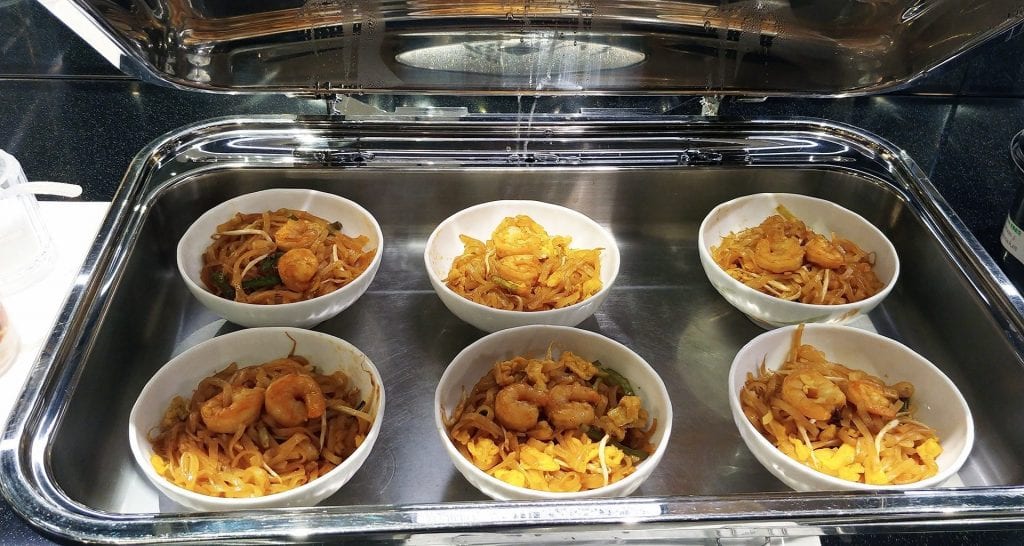
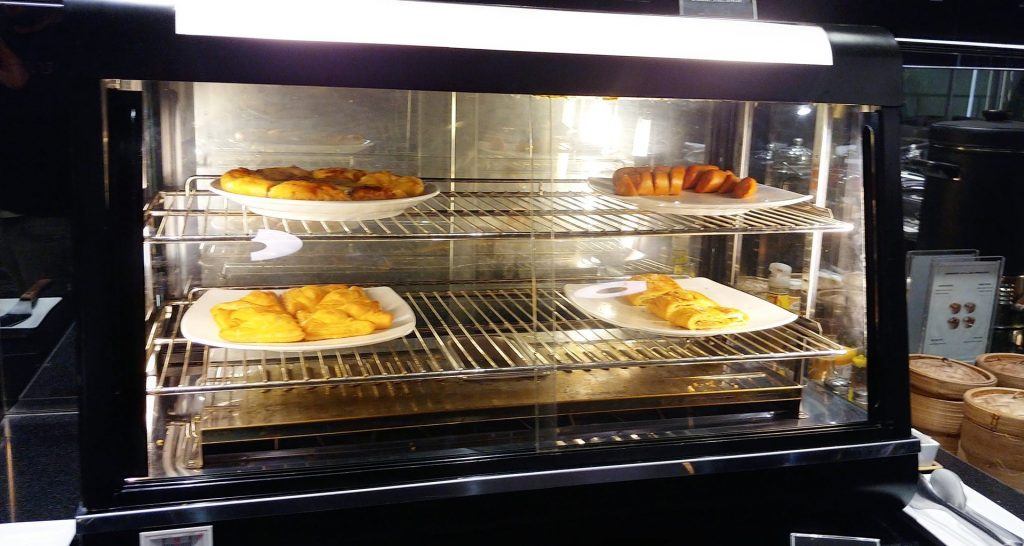
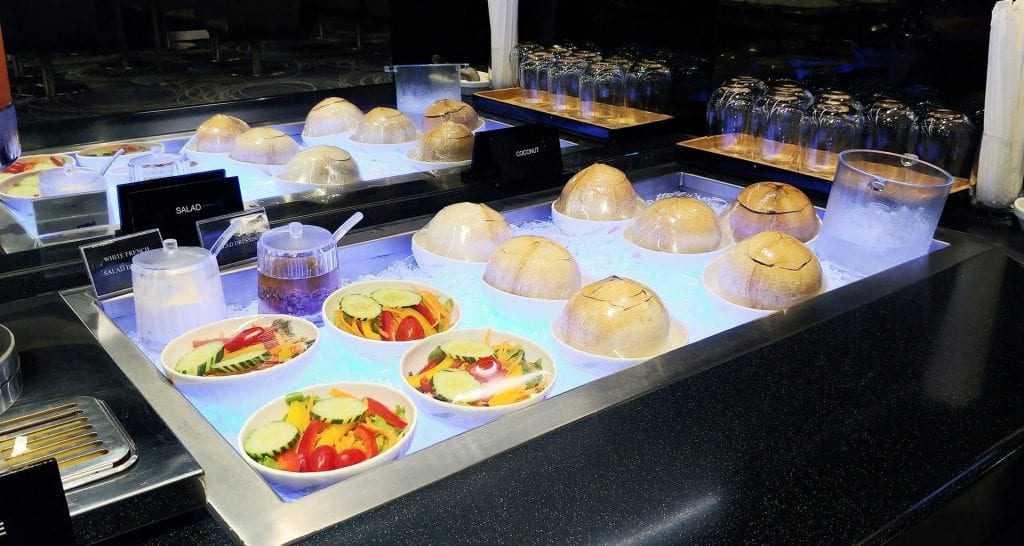
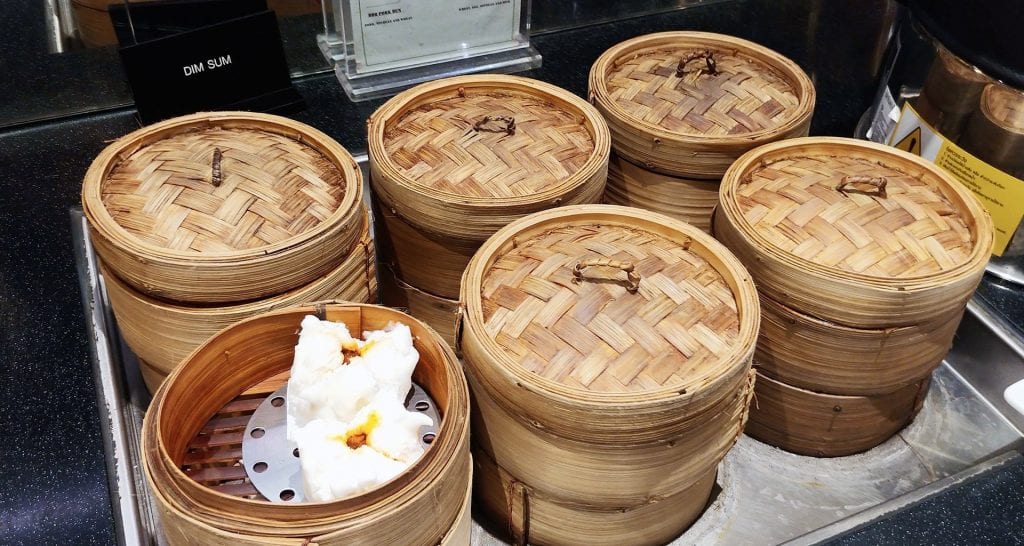
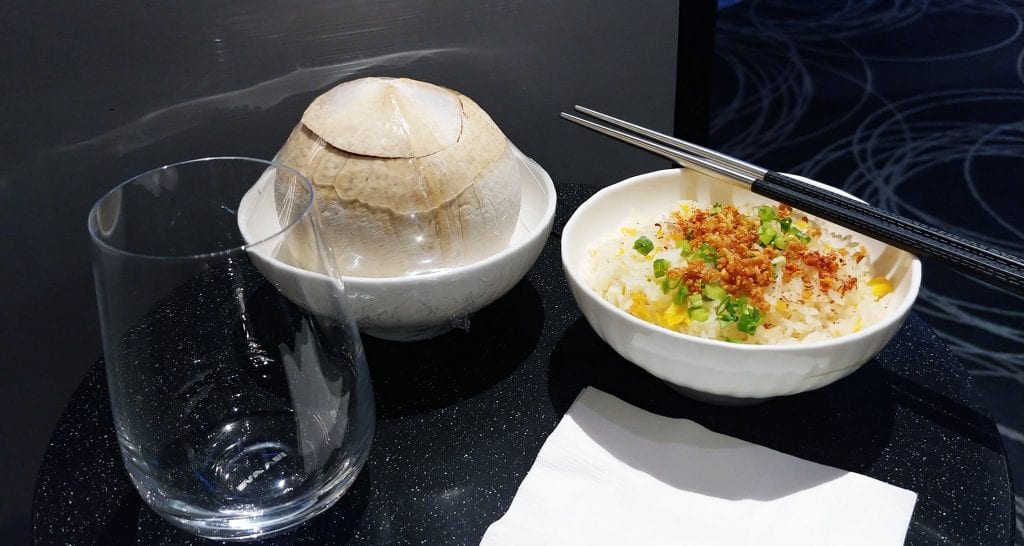
The shift to galley plating in premium cabins affects both presentation quality and service timing.
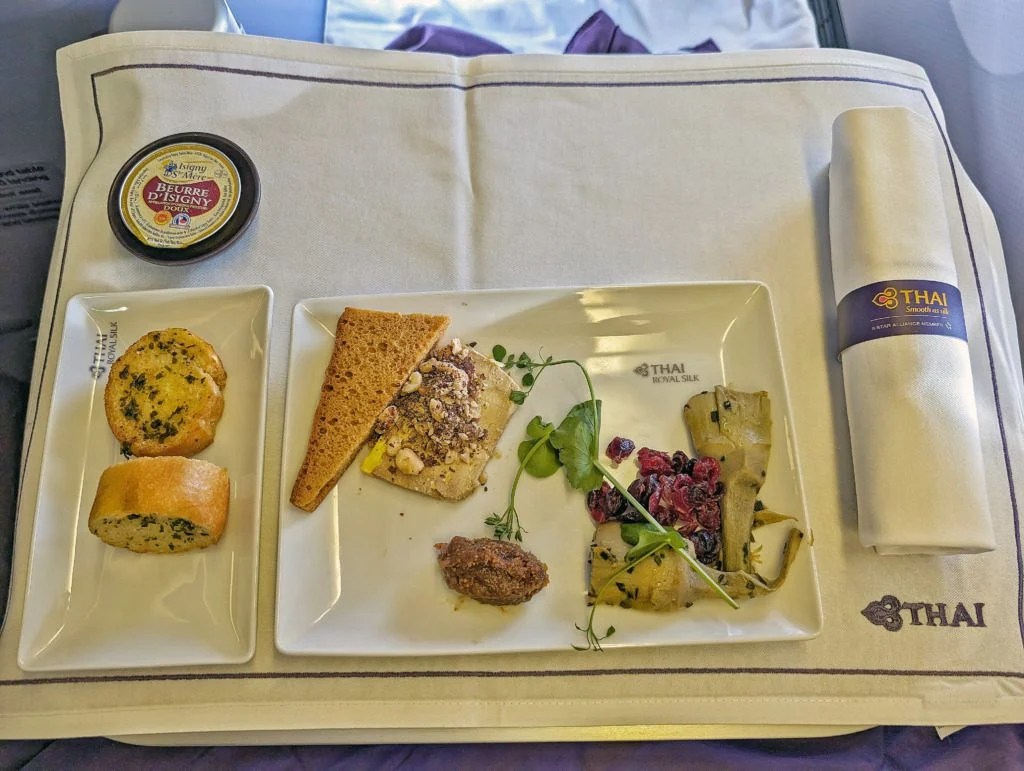

First Class
With Thai Airways planning to phase out first class by 2027/28, this behind-the-scenes look captures the development process for a service tier that may soon be aviation history.
The First Class Experience
- Patra Porcelain tableware
- Extensive menus with Dom Pérignon service
- Multi-course presentations: canapés, caviar service, mains, and desserts
These elaborate presentations demonstrate the complexity possible in first class but require significant galley space and crew expertise to execute properly during flight service.
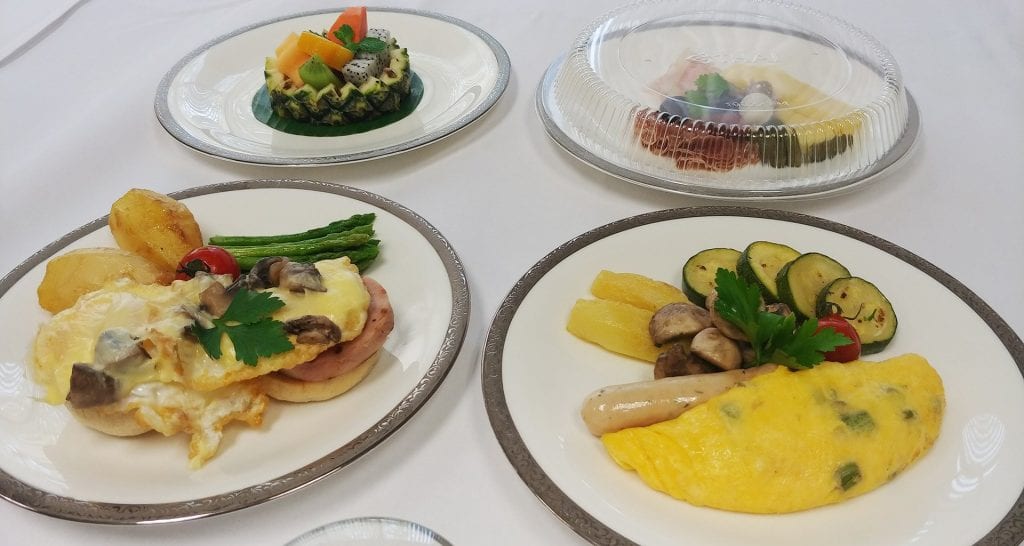
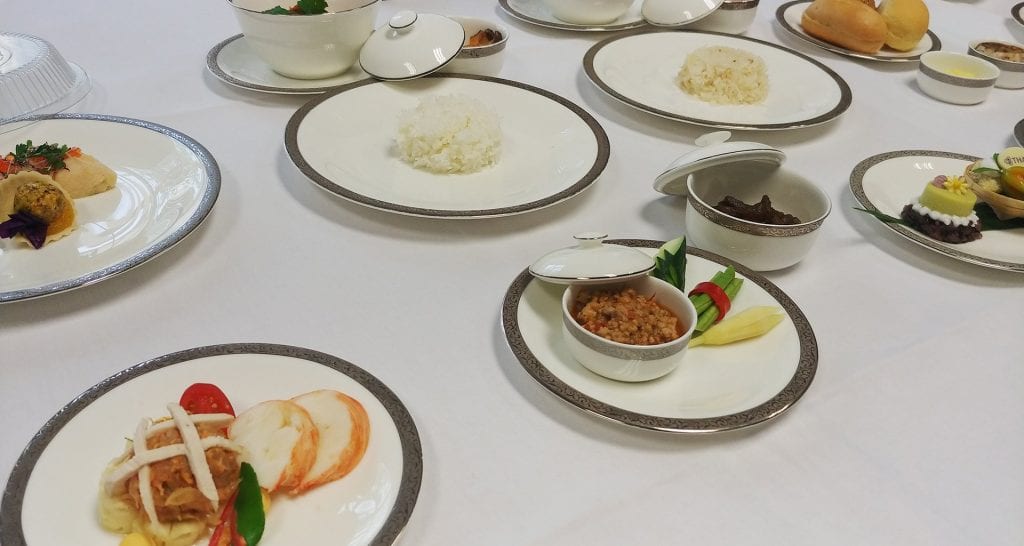



Signature First Class Dishes
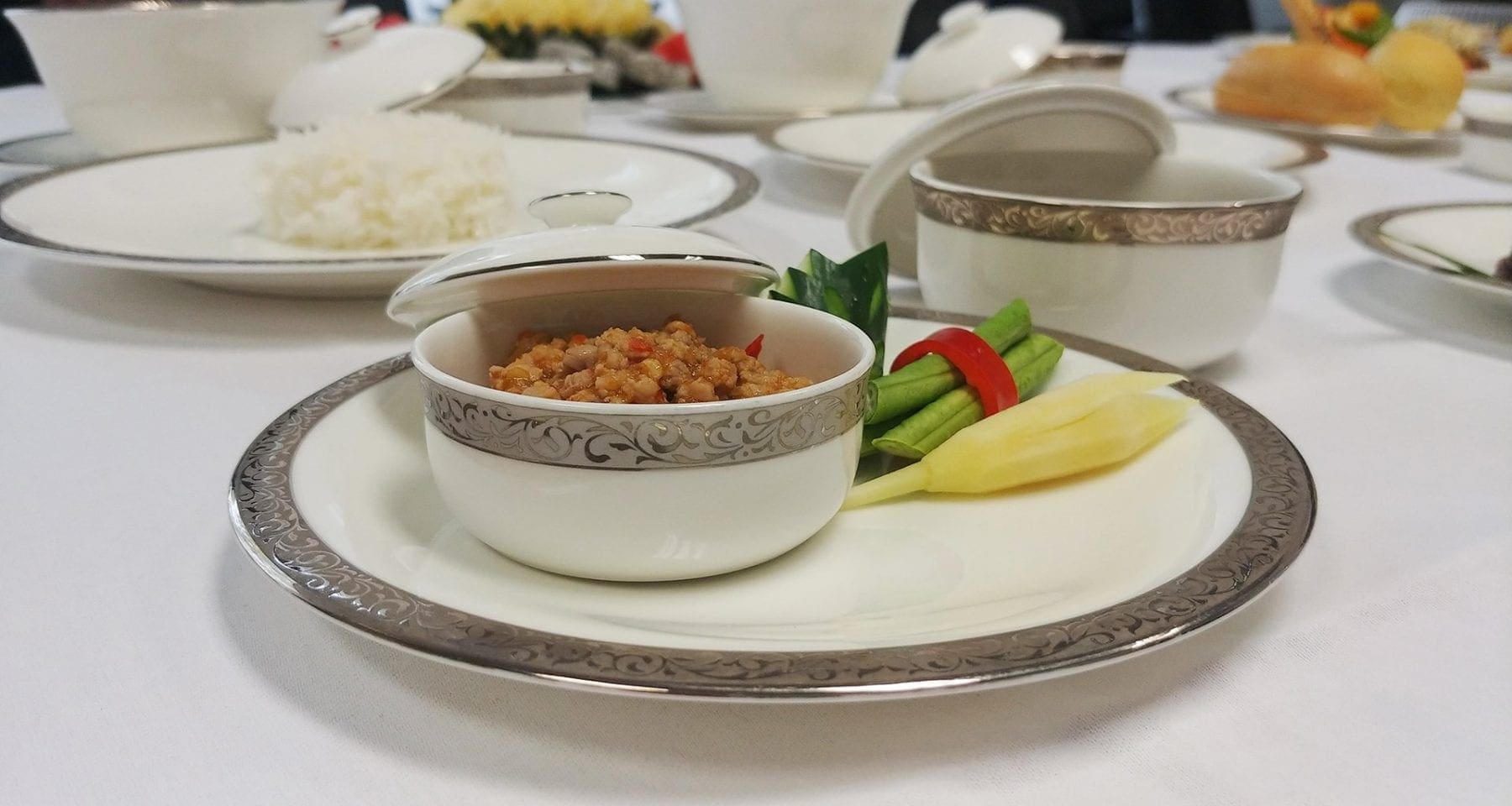
Spiced Mince Pork with Tamarind Paste
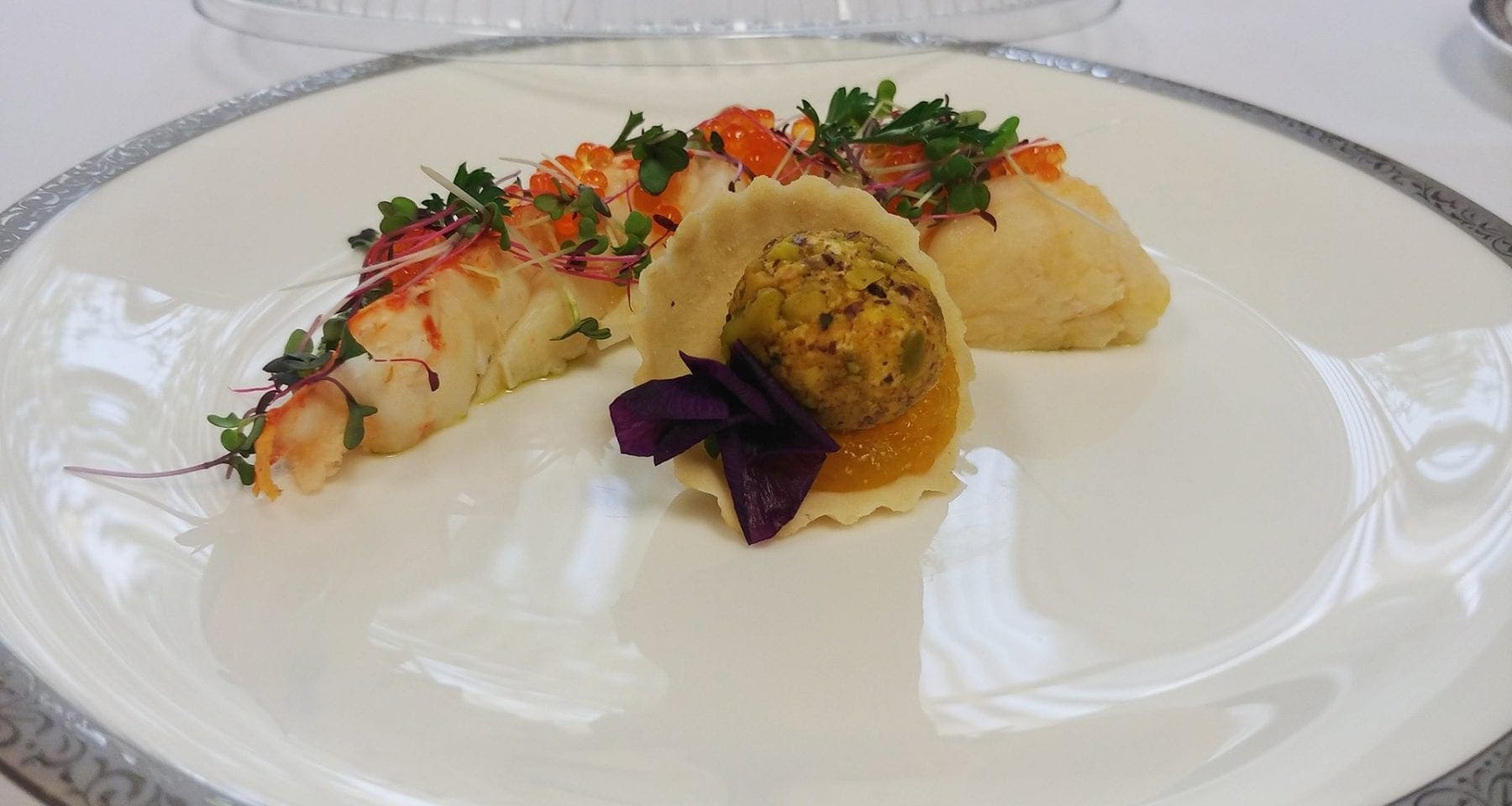
Lobster medallion with basil pesto, pistachio cream cheese ball in tartlet, Pensee flower, balsamic pearl, salmon roe, and tobiko
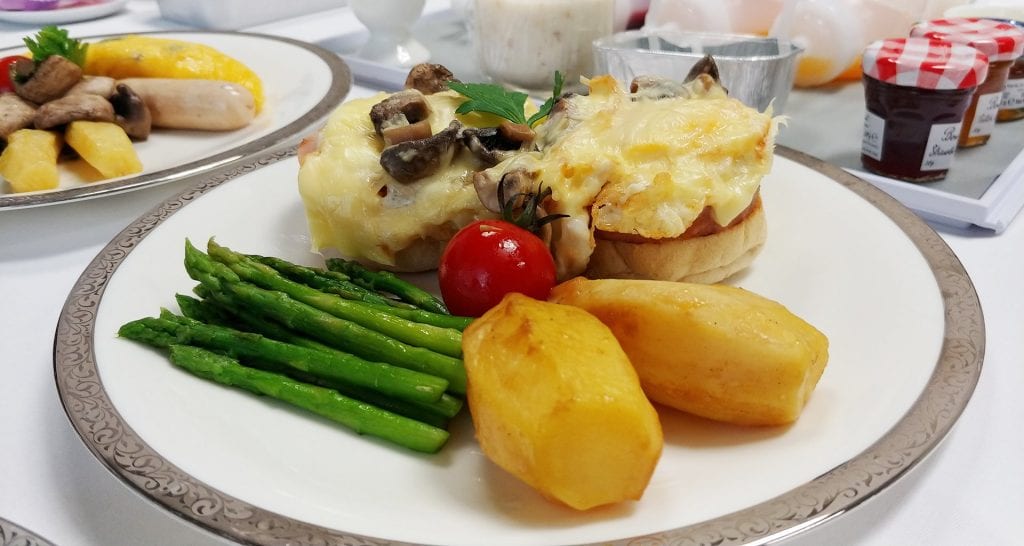
English Muffin Breakfast
Fried eggs, champignon, cheddar cheese, grilled ham, pommes château fondant, buttered asparagus, and stem tomatoes
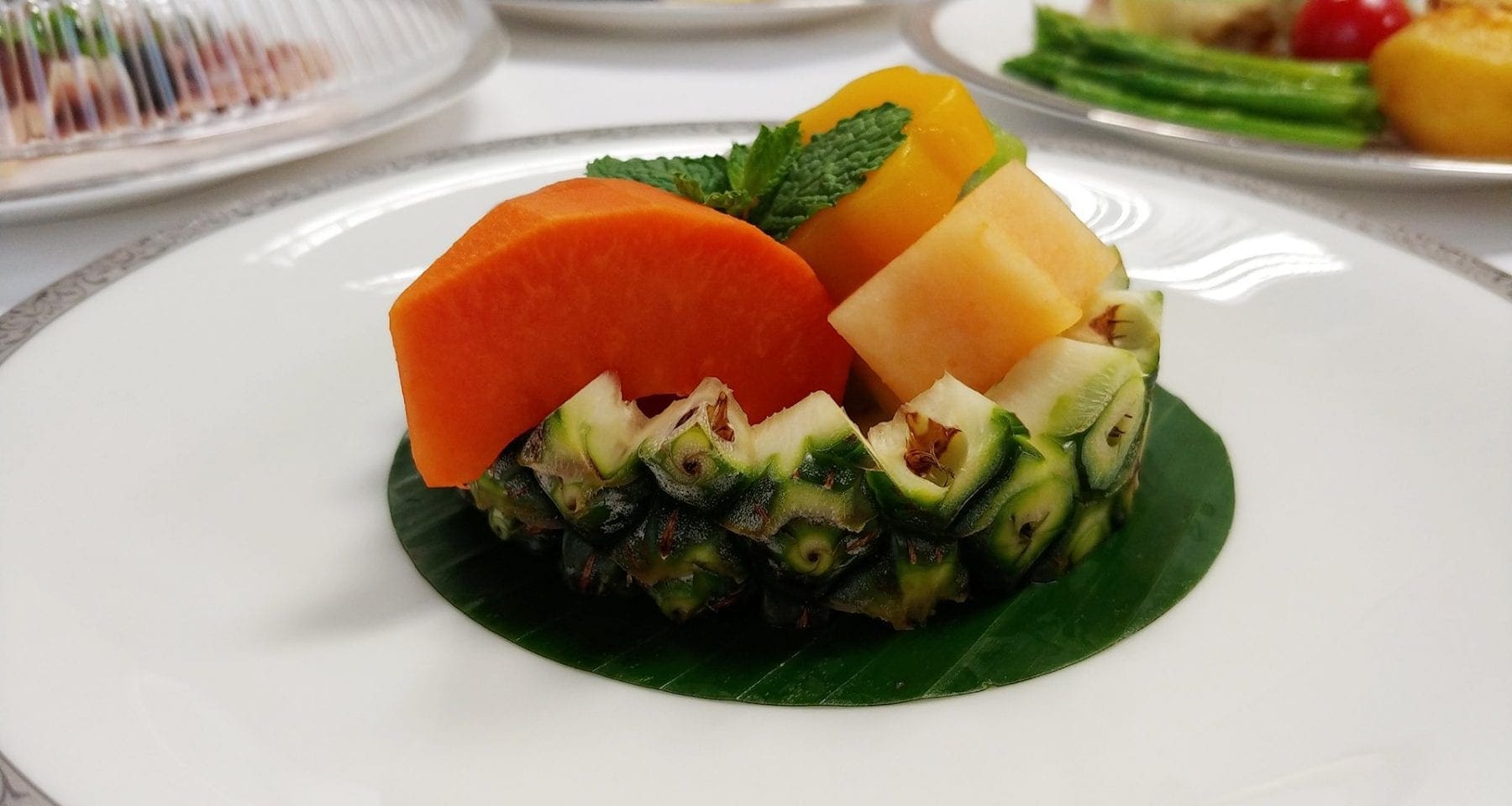
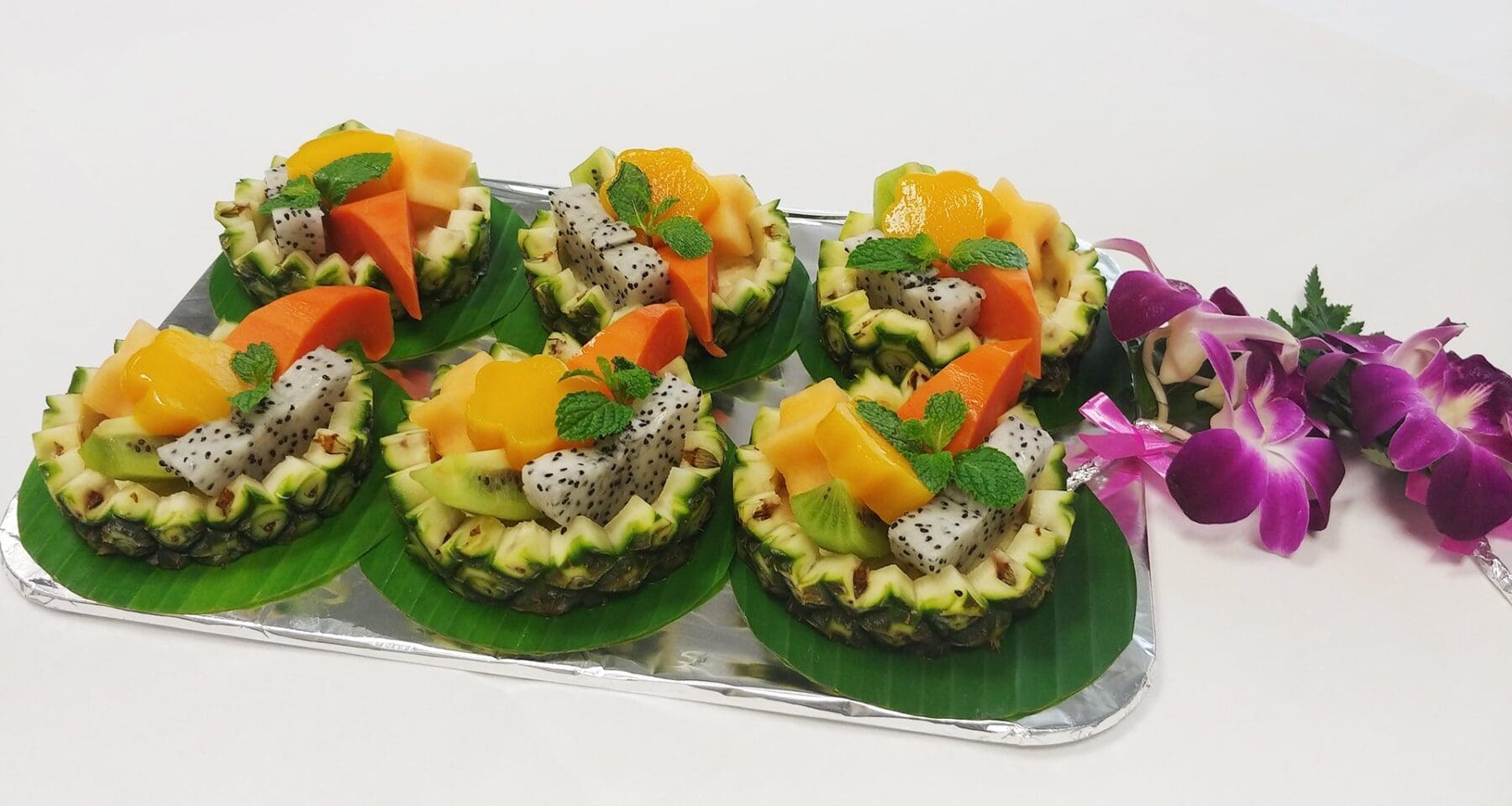
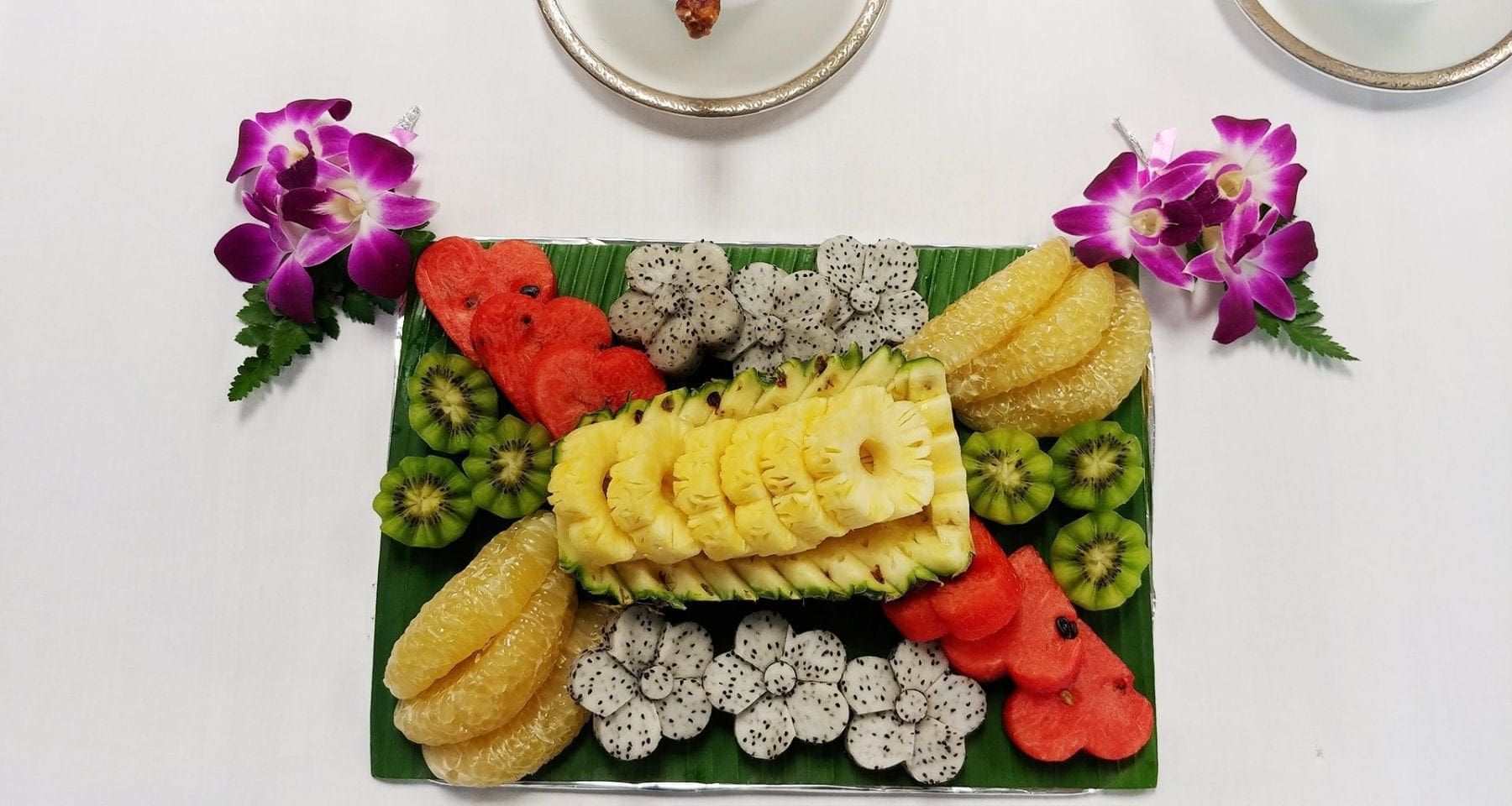
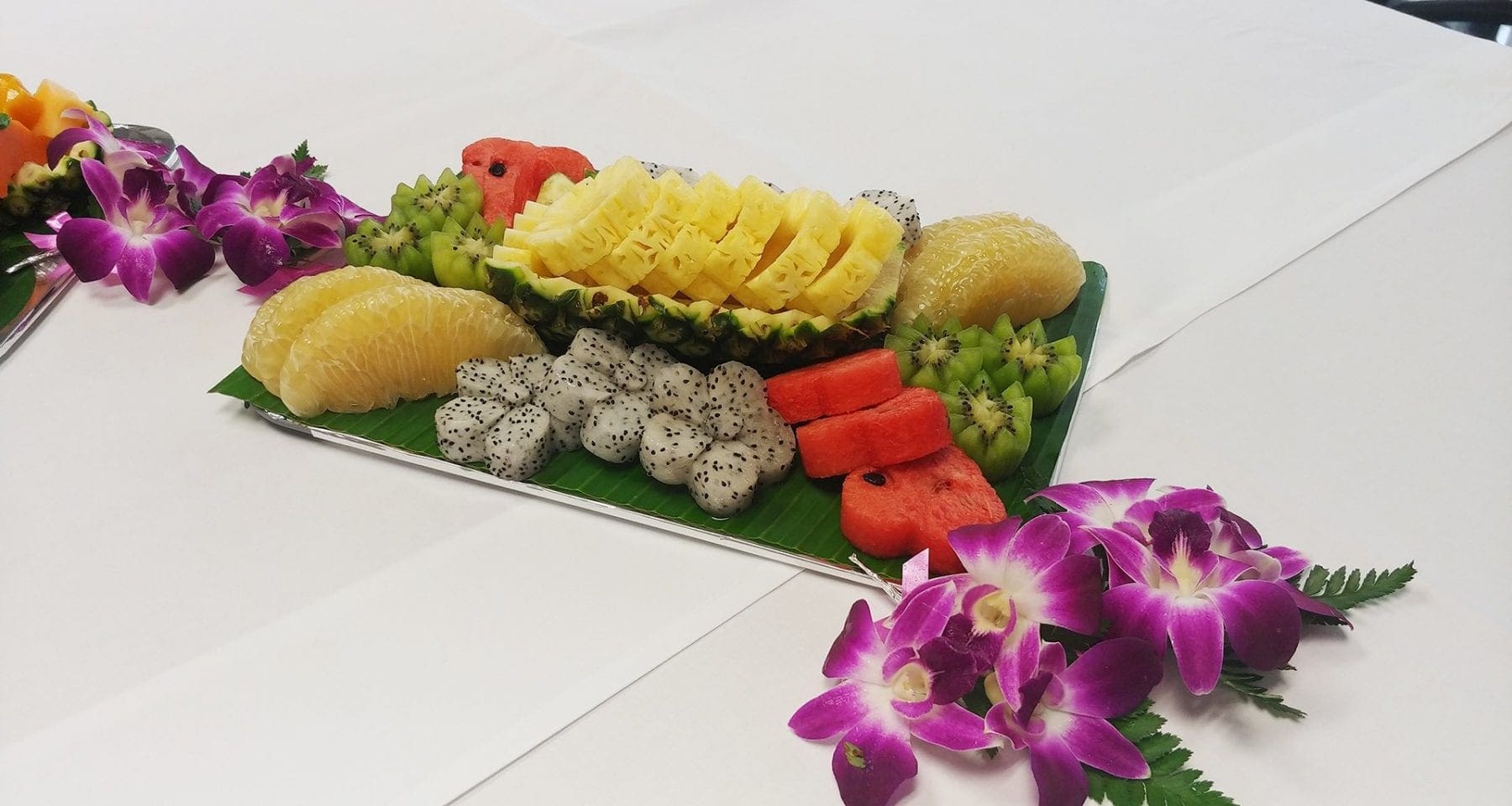
Fruit Presentation
Pineapple centrepiece with kiwi, papaya, mango, cantaloupe, and dragon fruit
Business Class
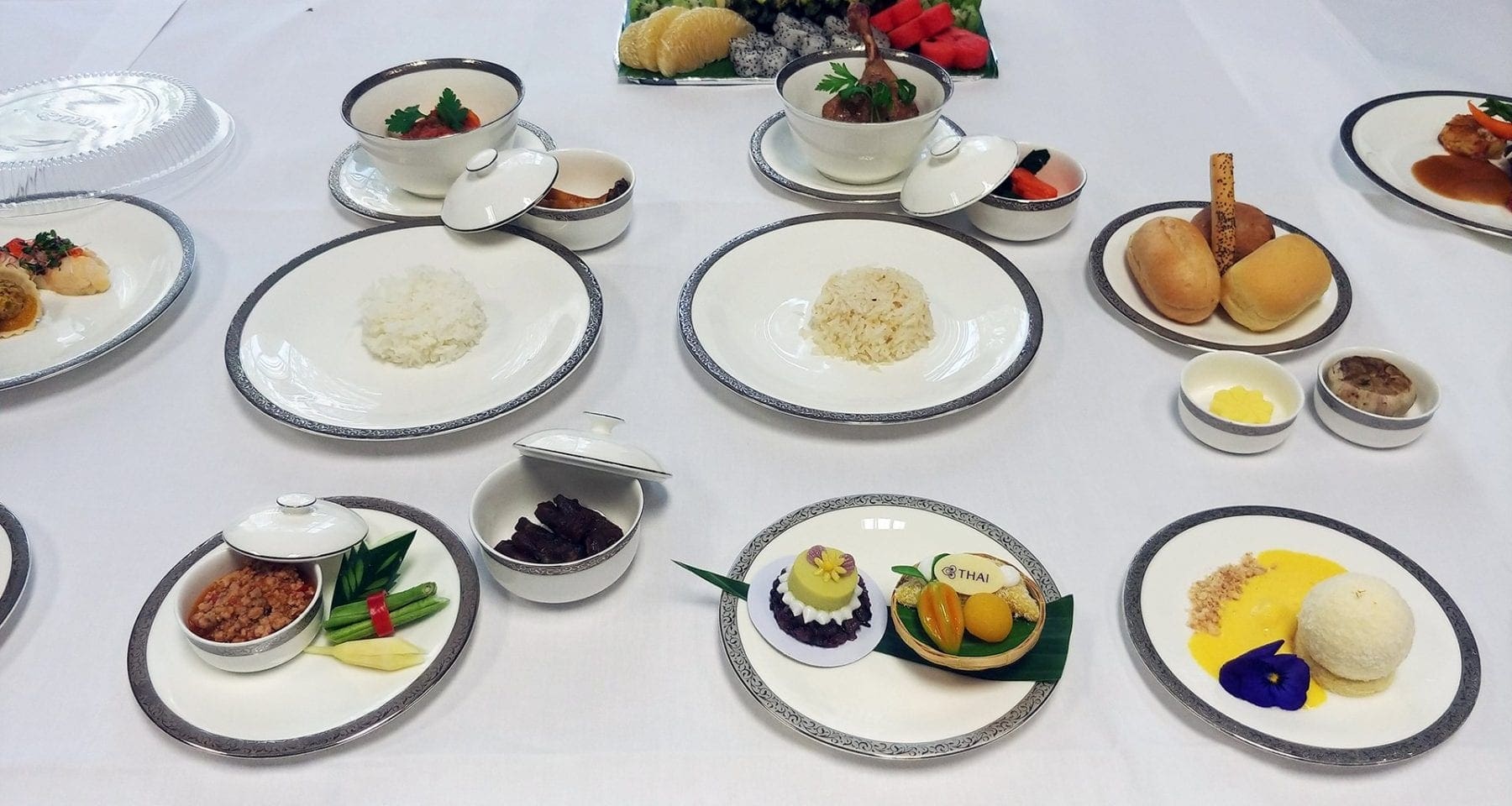
Business class features a Royal Porcelain presentation, with a strong focus on authentic Thai desserts – and this is where Thai Airways really differentiates itself.
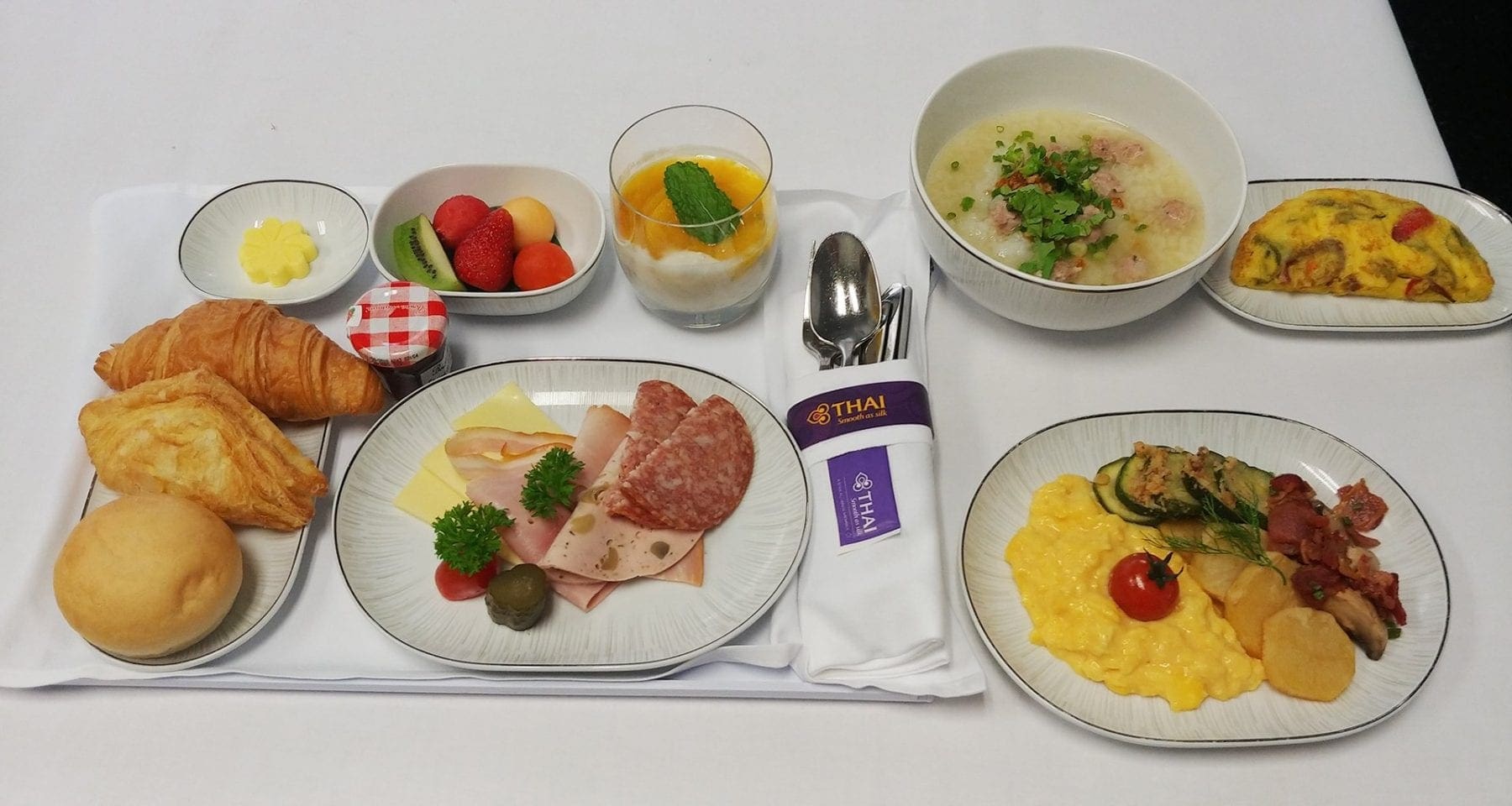
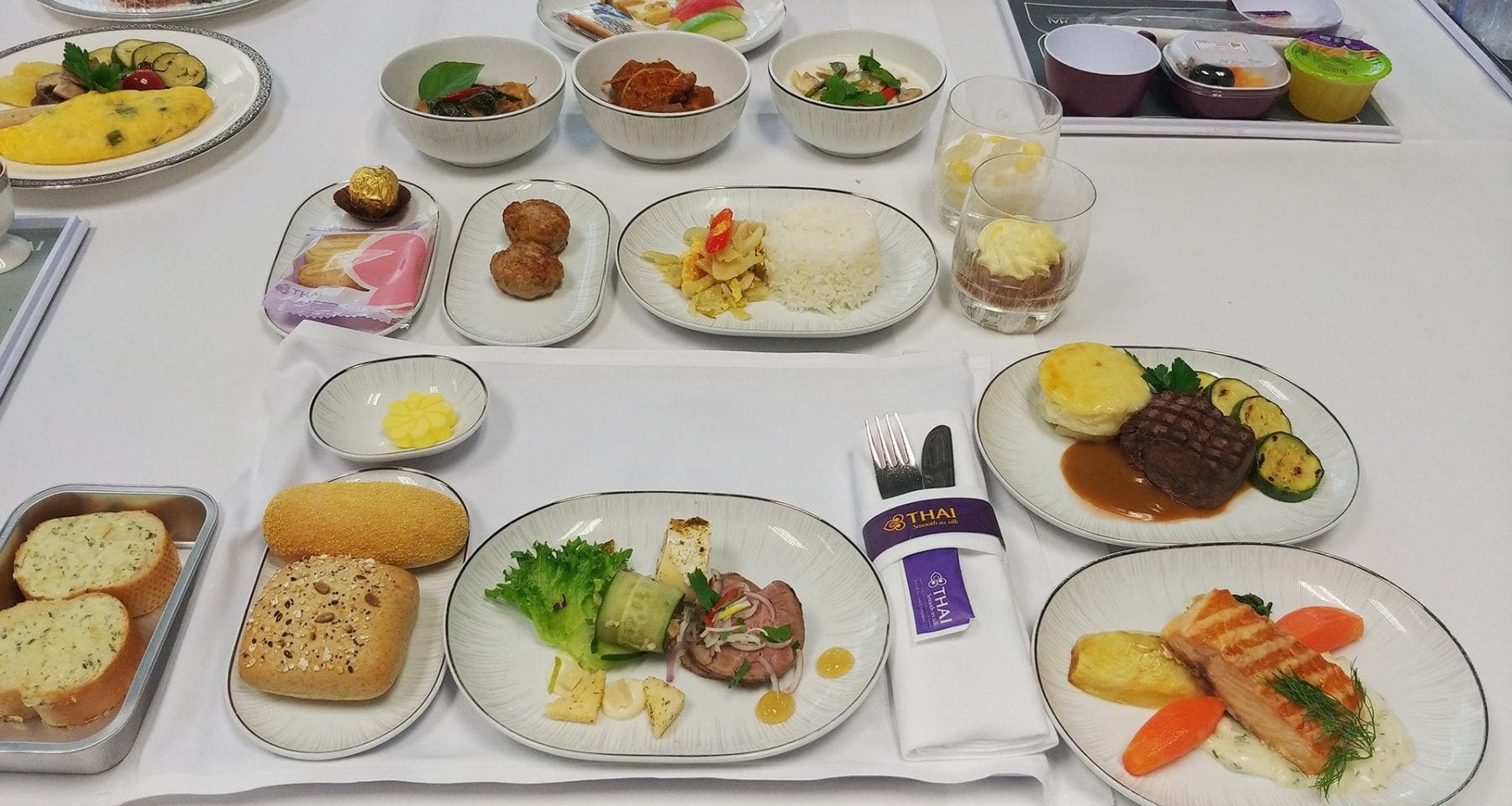
Traditional Thai Desserts
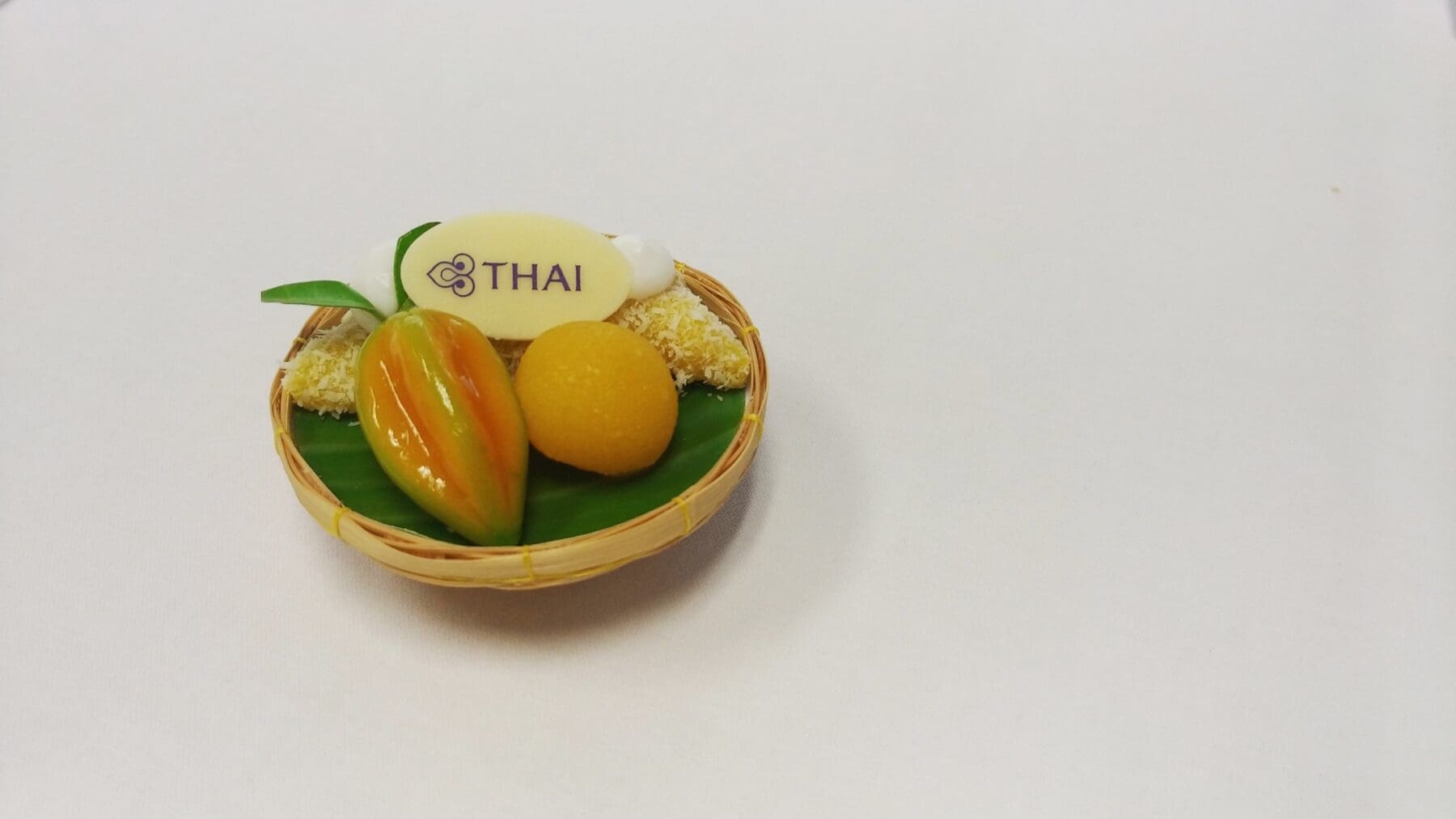
Look Chup (ลูกชุบ)
Yellow bean paste with sugar and gelatine
Kanom Khao Tom Mud (ขนมข้าวต้มมัด)
Traditional wrapped sweets
Baked Egg Custard (ขนมหม้อแกงไข่)
Thai-style custard preparation
Kanom Sod Sai (ขนมสอดไส้)
Stuffed traditional pastries
Banana in Syrup (กล้วยไข่เชื่อม)
Classic Thai dessert preparation
These desserts require specialised preparation techniques that maintain authenticity while adapting to altitude service constraints – no small feat at 35,000 feet.

Economy Class
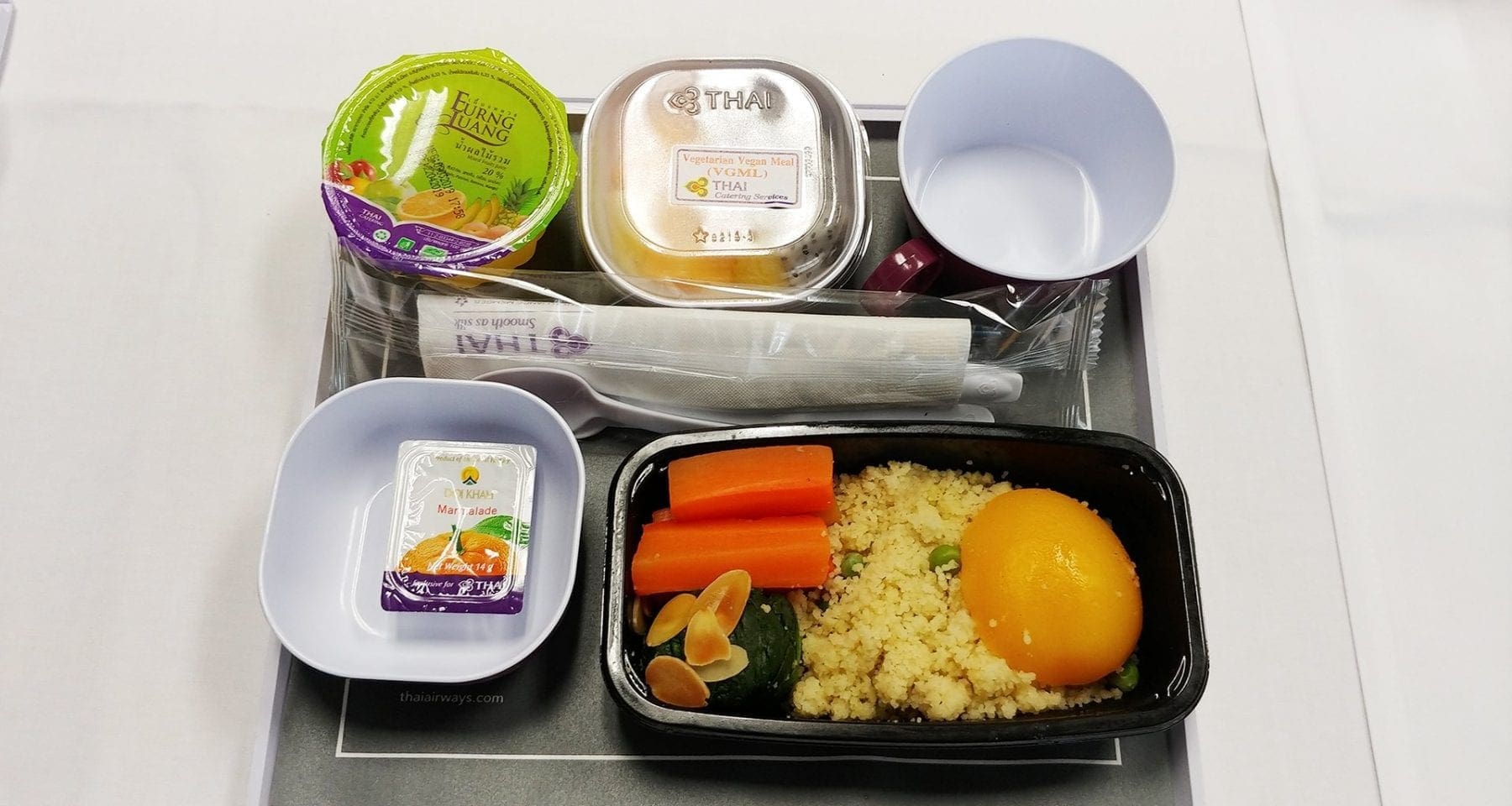
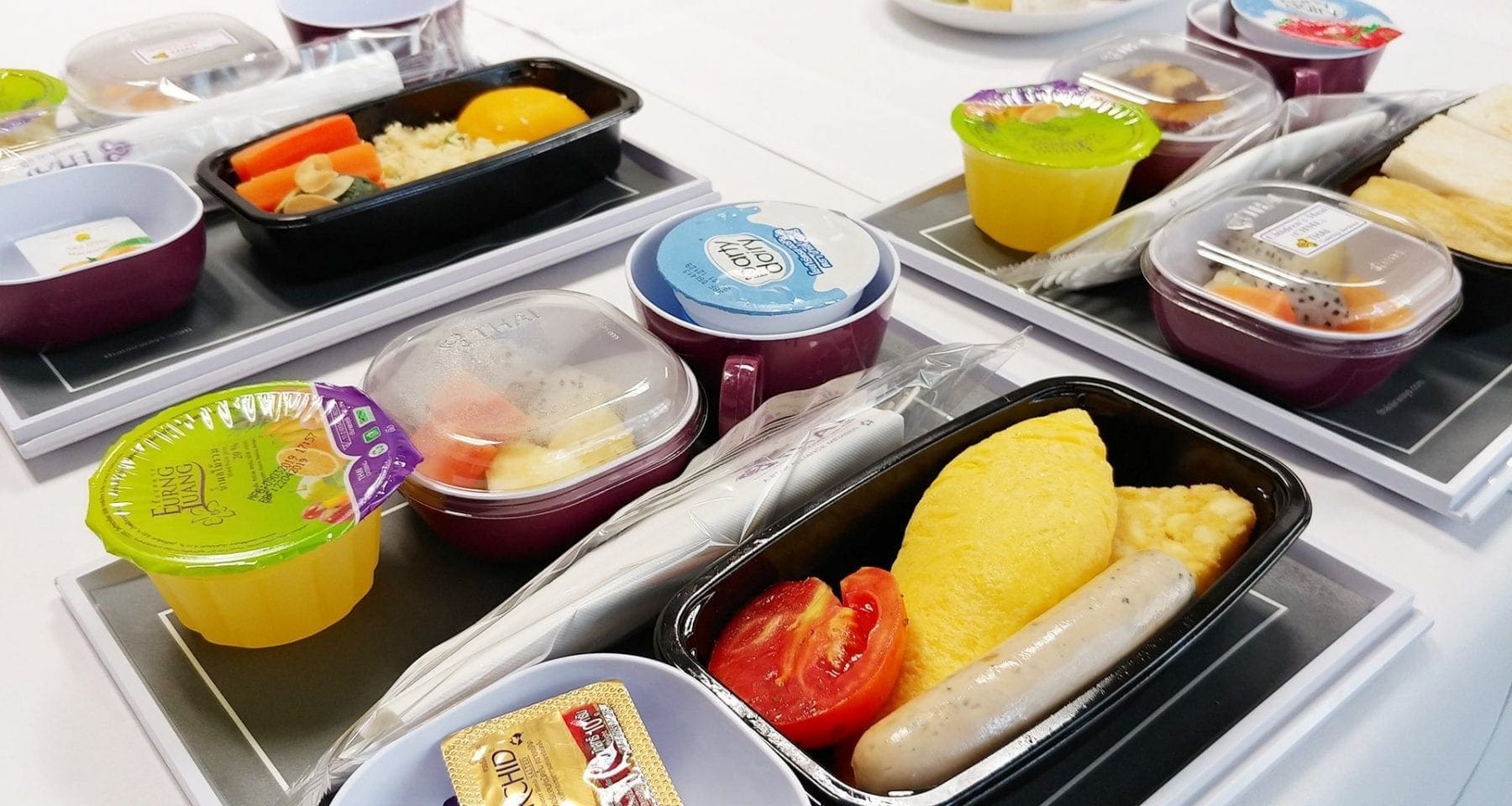
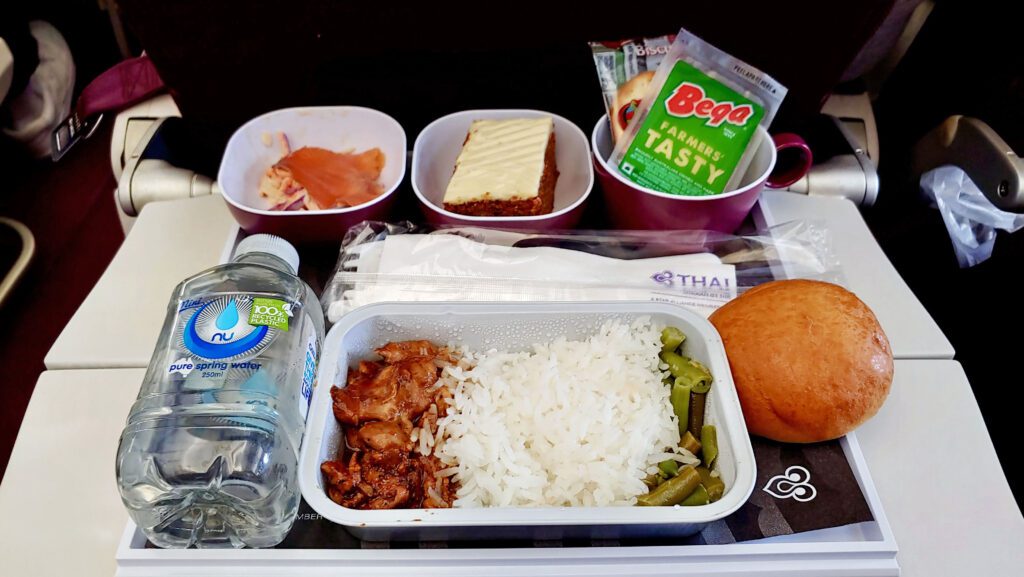
Long-haul economy passengers receive two hot meal choices, while shorter flights get meal boxes or snack bags. The development process focuses on dishes that retain flavour and texture after reheating in aircraft ovens.
Standard Options
- Chicken with rice
- Beef with noodles
- Fruit salads
- Pastries and ice cream
Economy class focuses on reliability over creativity, which reflects the challenge of mass catering at altitude. With 90,000 meals produced daily, consistency is paramount.



Conclusion
The elaborate test kitchen presentations translate to varying degrees depending on cabin class and operational constraints:
First & Business Class benefit from complex preparations and authentic Thai flavours
Economy Class prioritises consistency and efficiency over creativity.
Original recipes and local sourcing explain the flavour consistency frequent flyers recognise.
Understanding the development process helps set realistic expectations for what actually arrives at your seat versus what is presented in marketing materials.
Thanks to Thai Airways for providing behind-the-scenes access to their Bangkok headquarters and kitchen operations.